
Inflation Is Over
Despite a glum "national mood", the economy is doing great.

Blink and you’d have missed it; in the better part of the past year, inflation has almost completely subsided and the economy has exploded to heights it’s never seen before. I know what many of you must be thinking: “Has he gone mad?” But while most normal people — including, most likely, you — have tuned out the news, economic reality trudges on, and the results have been spectacular.
I’m putting some of my credibility on the line here by releasing this before the Fed releases its January inflation data, but while the Fed is duty-bound to avoid splashy statements like the one that is my title, I have no such mandate. I’ve seen enough: the post-COVID inflation is vanquished, the economy has recovered, wages are up, and we’re experiencing a boom not seen since the 90s — at least for now.
Let’s start with the headline economic event of the post-COVID era.
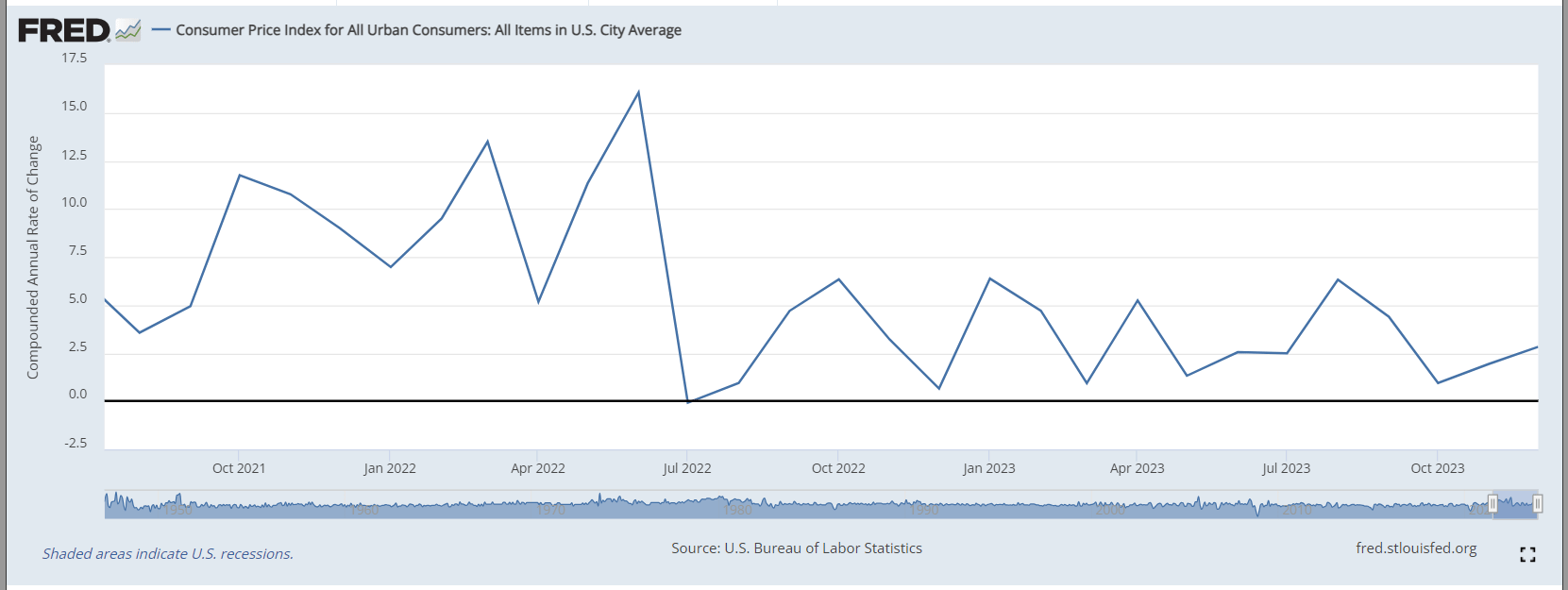
Here I’ve just charted the annualized monthly inflation rate since mid-2021. You can pretty clearly see sort of a “step” down in mid-2022. Since that “step” worked its way into the year-over-year data 12 months later, the YoY headline inflation number has never exceeded 3.7%, and has typically been in the low- to mid-3s. There’s more to the story, though.
What is inflation?
A lot of people often complain about this, but it matters more to discussions of inflation when you exclude food and energy prices. That complaint makes some sense — people pay for those things, too, and so those things affect people’s spending and financial security. But that isn’t the same thing as a meaningful definition for “inflation”, and that has consequences for treating underlying economic conditions.
Think of it like a doctor trying to diagnose a problem. A stiff neck hurts no matter what, but whether it hurts to twist or hurts to look up or down could be the difference between needing a new pillow to correct your posture and needing a lumbar puncture to test for meningitis. Just like subtly different symptoms can indicate different treatments for a patient, prices in different sectors indicate different treatments for an economy.
Inflation, as we were all taught in school and as we commonly think of it, is a broad-based devaluation of the dollar itself, and defining rising prices in any one sector as inflation deprives us of the ability to distinguish between different diagnoses and to select appropriate solutions. A bad harvest year may raise grain prices, for example, but you wouldn’t call it inflationary. But proverbial bad harvest years happen all the time, and that makes food and energy prices in particular extremely volatile. For example, while people complained of natural gas prices in the winter of 2022-2023, there’s a wealth of free and easily-accessible data on natural gas futures that showed the spike to be temporary.
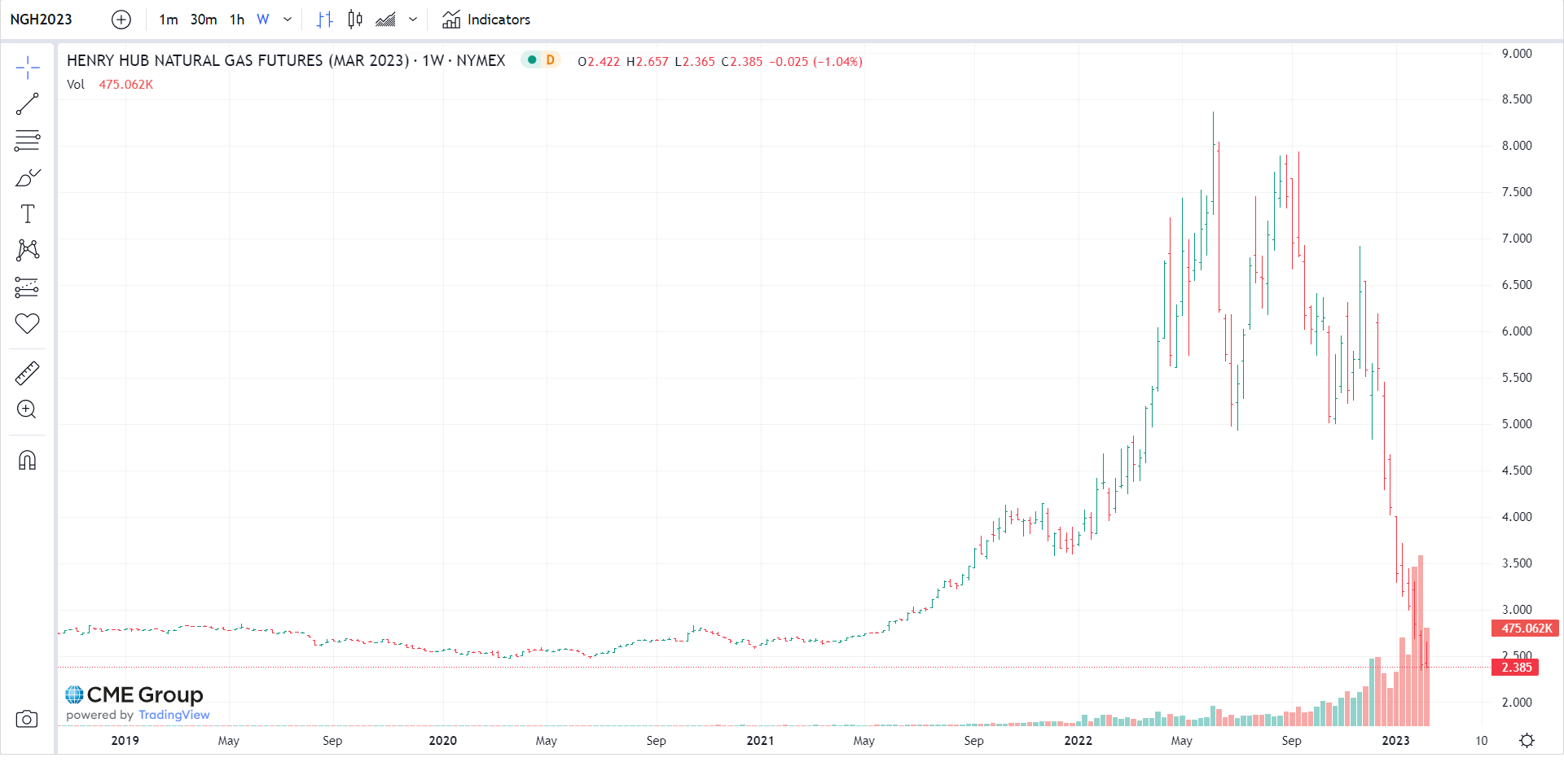
Including that kind of major fluctuation in prices caused by exogenous factors in our discussions of the devaluation of the dollar would render such discussions meaningless. So, let’s take a look at some other measures of inflation.
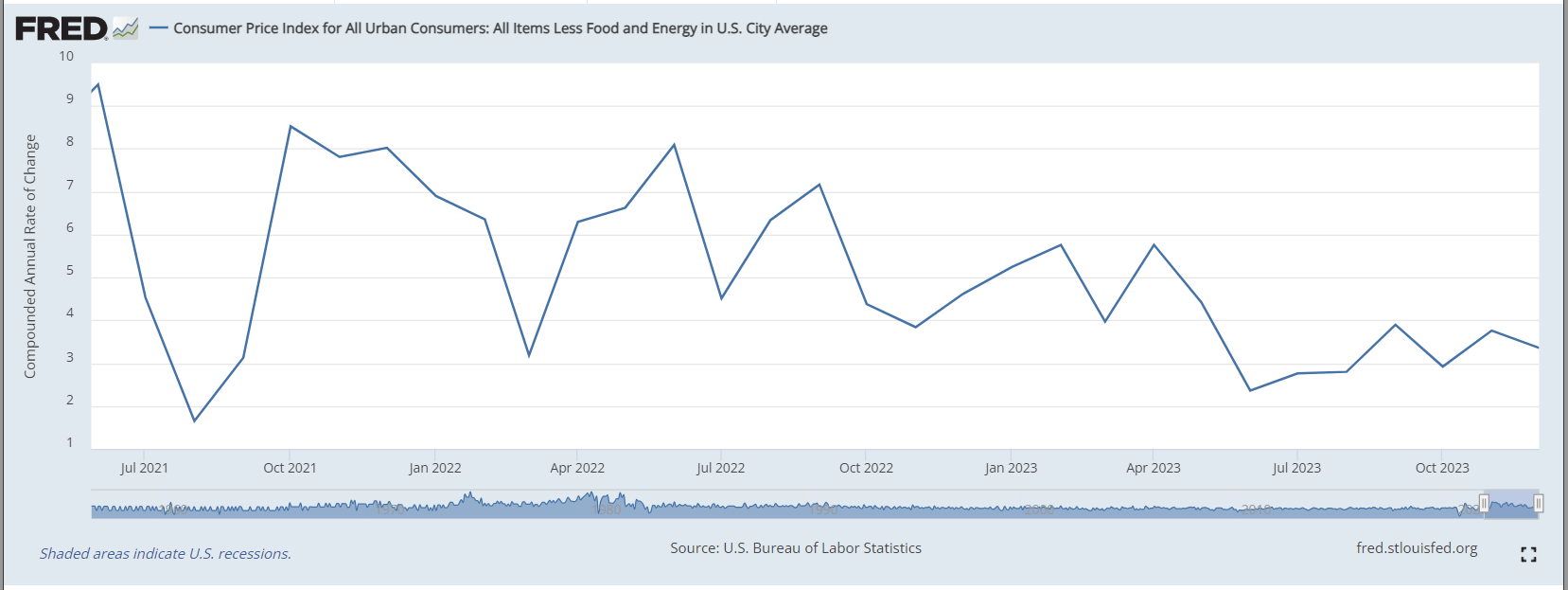
Excluding food and energy prices, we get similar results! The Fed, however, prefers a slightly different measure still.
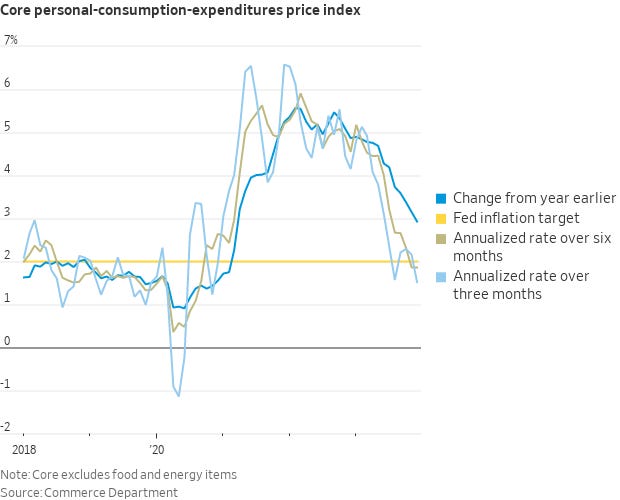
This one, too, shows not just progress, but a total victory: over about half a year, core PCE has hit the Fed’s target.
Prices
I understand, though, that while terminology may matter for discussing monetary policy, normal people would argue that rising prices “hurt the pocketbook no matter what you call it”. And this isn’t about to become an exercise in telling people some obscure measure looks good while anything that’s meaningful flashes red.
So let me return my attention to my original chart. This time, total inflation is in red and overlaid over inflation less food and energy (in blue).
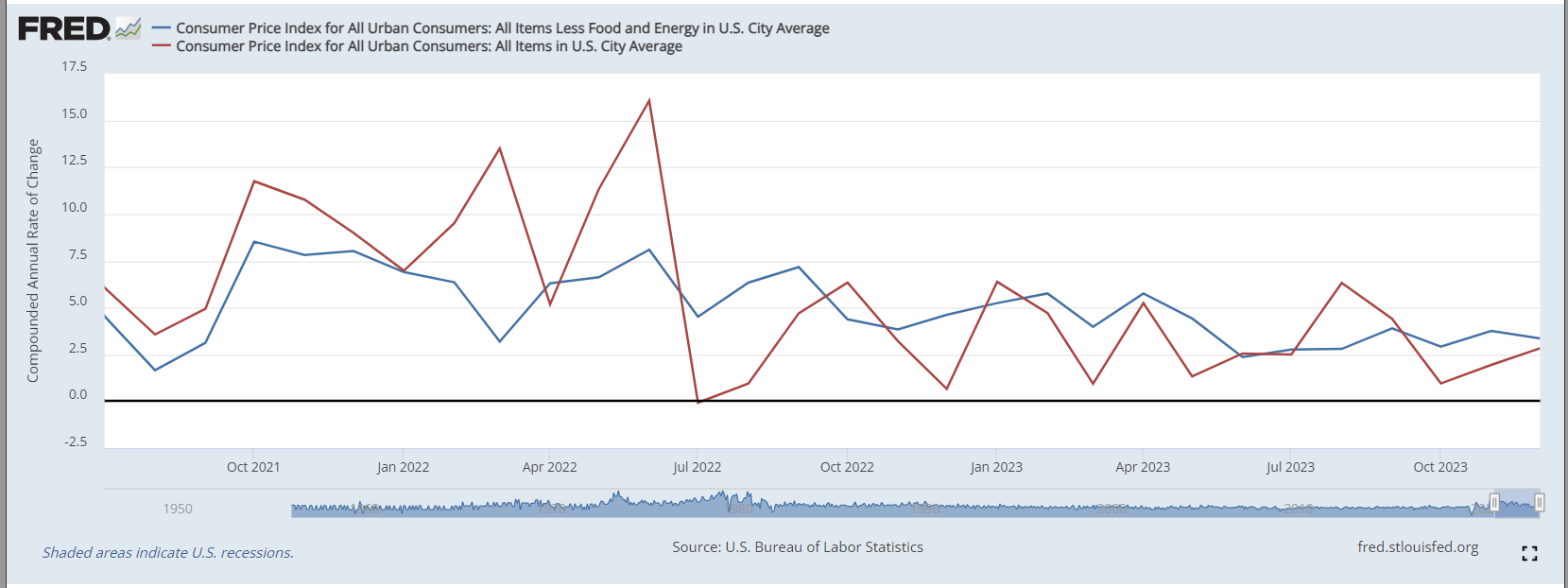
Notice that including food and energy actually reduces the rate; that’s because inflation as a whole has outpaced food and energy prices. Indeed, we saw above that natural gas has fallen in price, but so has gasoline.
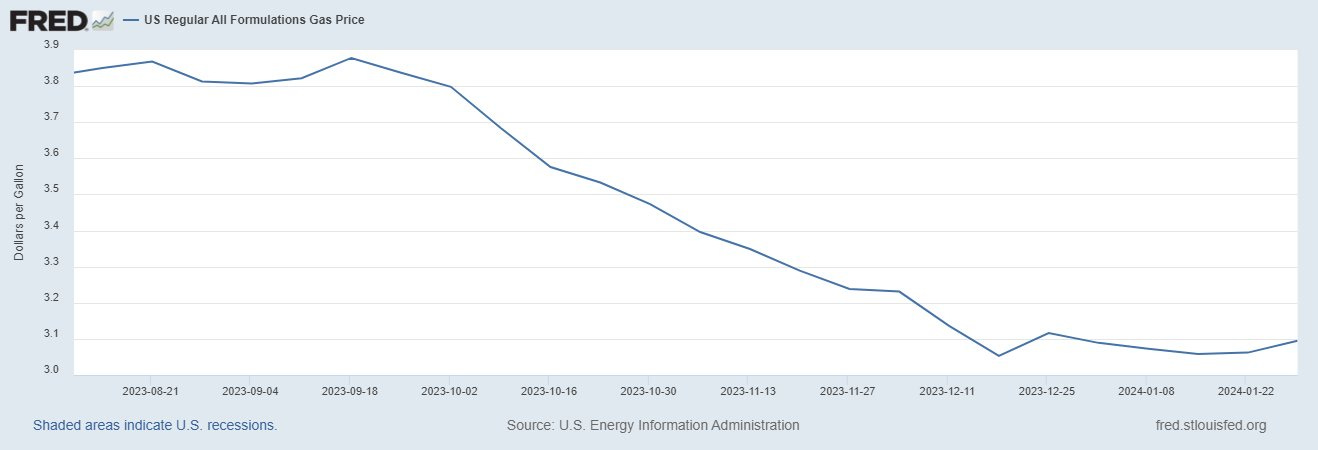
Sidenote: oil is a global market, but it’s plausible that this is in part due to the long expansion in the American oil industry; the US now produces more oil than it ever has.
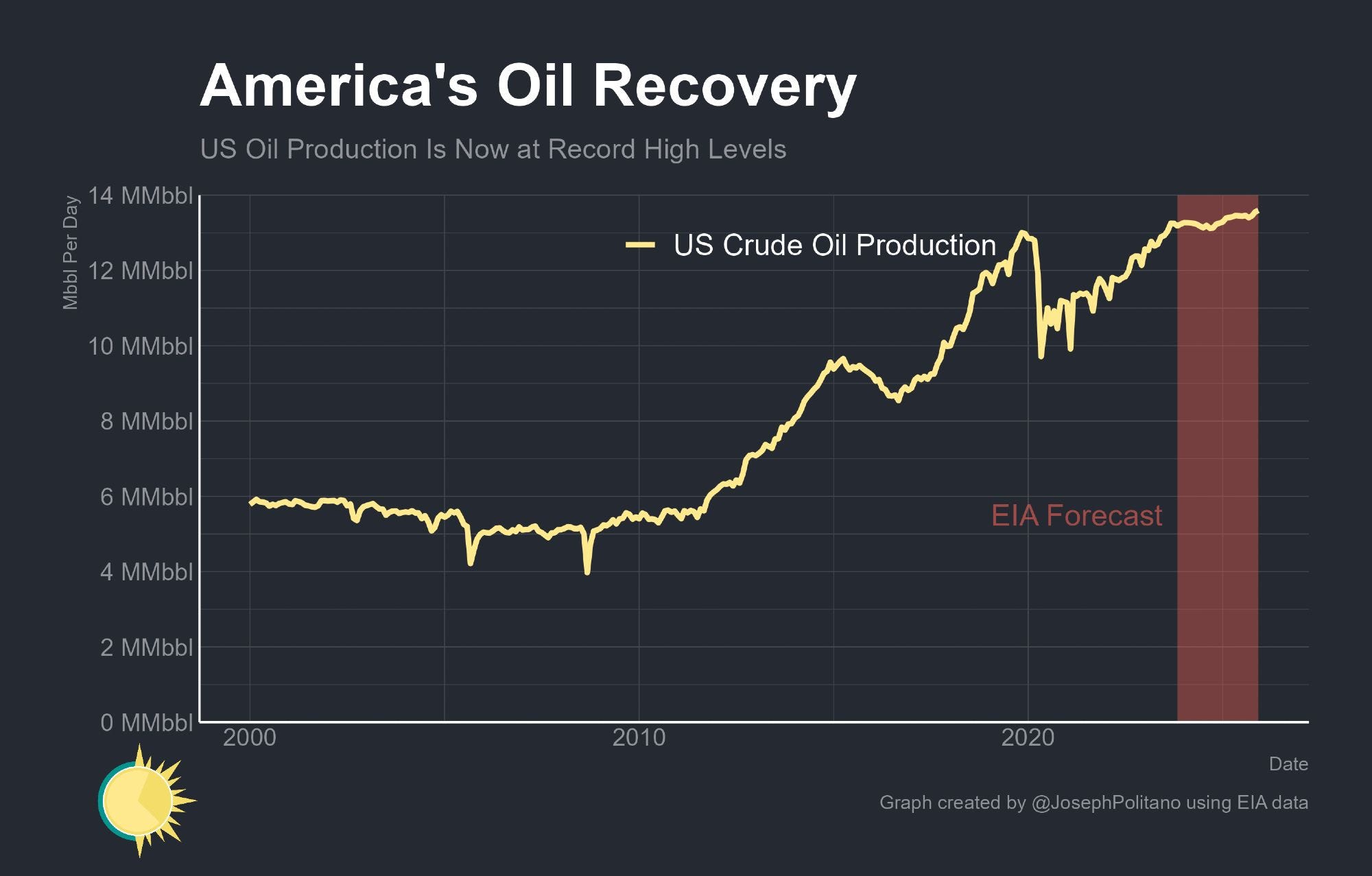
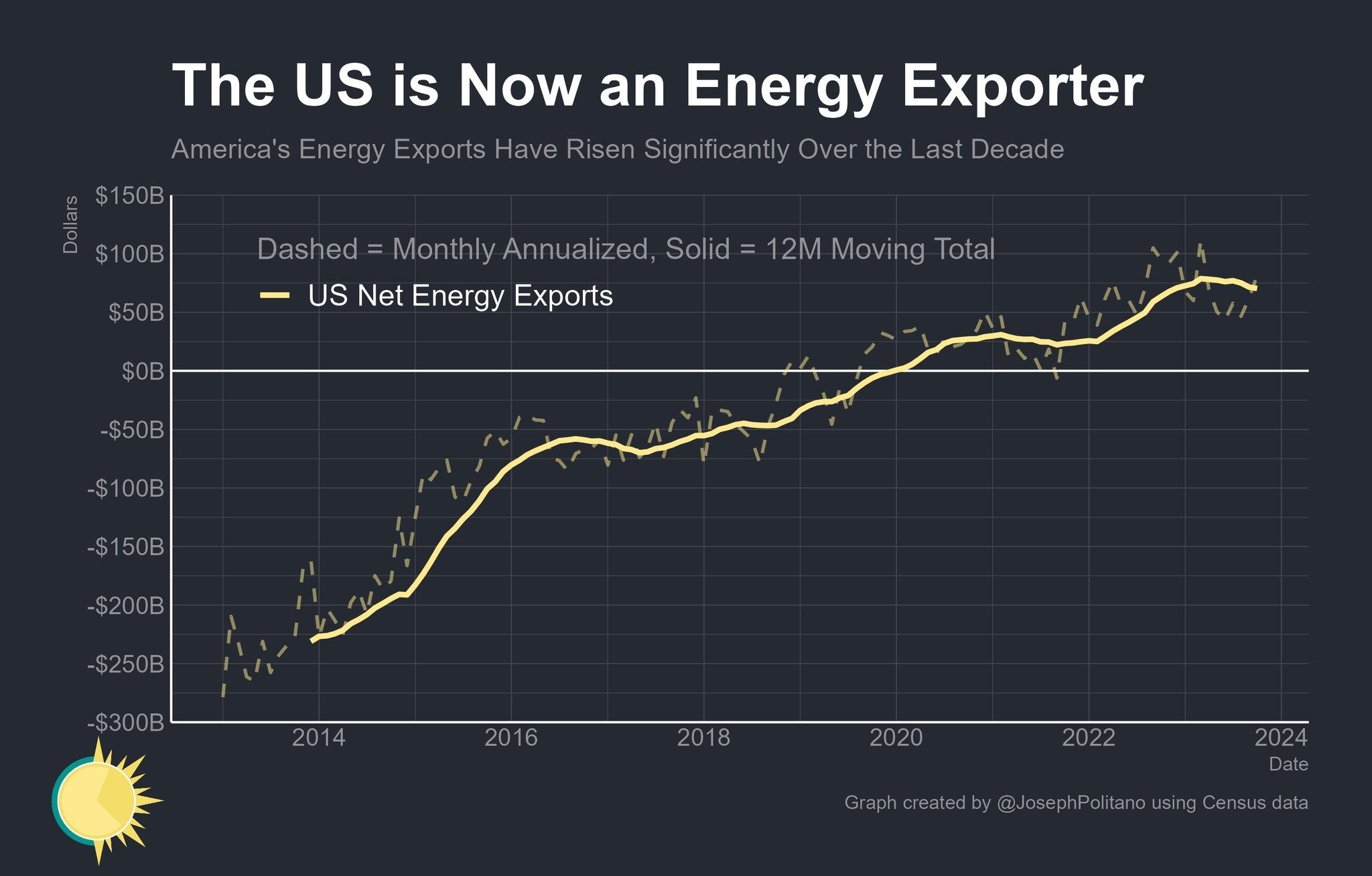
This, again, should drive home the point that short-term gas prices are pretty disconnected from any meaningful measure of inflation as an indicator of how valuable the dollar is, but also that inflation is not cherry-picked as a measure to disregard people’s personal financial situations. Economists have loads of measures for things, and a lot of those overlap to a degree. If they all point roughly in the same direction, that’s a good sign. For good measure, here are two more inflation metrics.
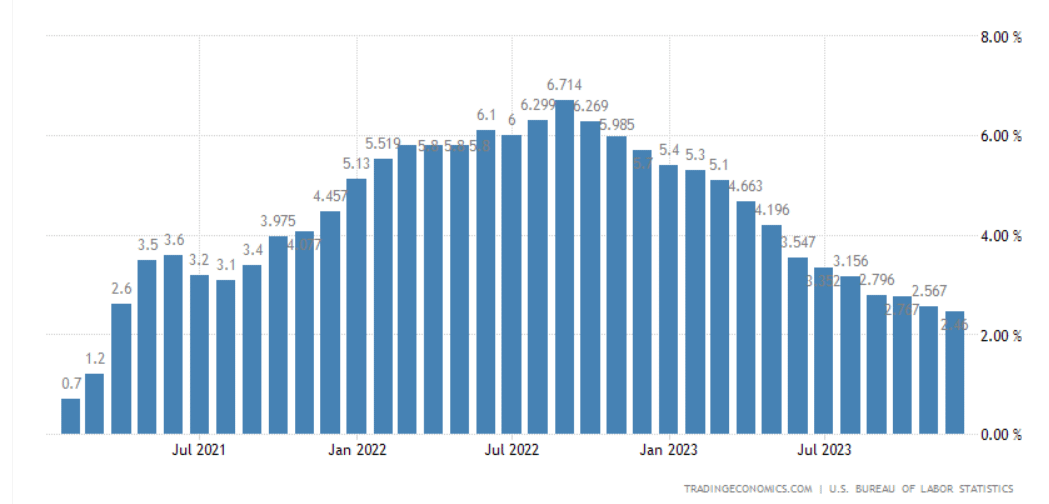
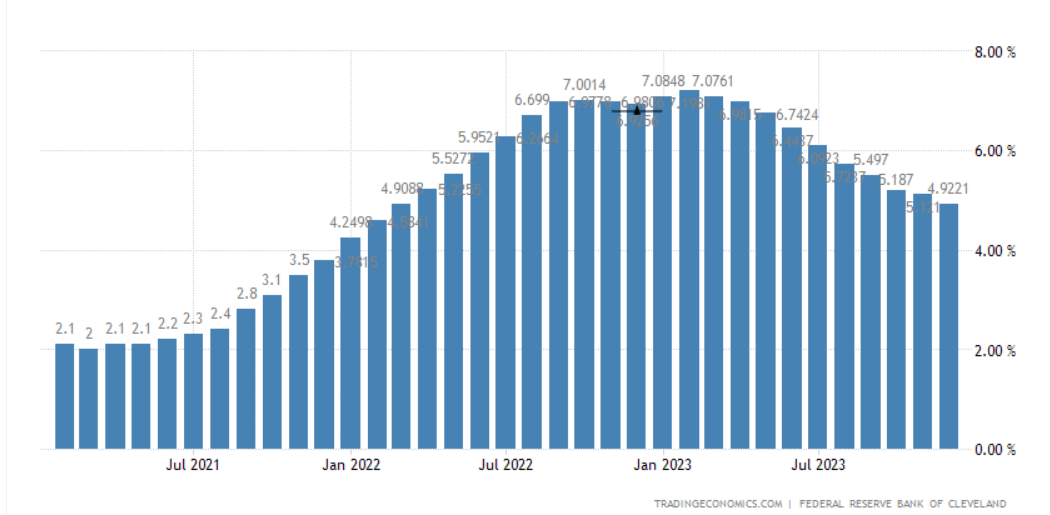
Median CPI, while higher than the rest, has been shown in some studies to reflect consumer sentiment better, and this may be part of why some folks are still pretty tightly wound about inflation. Luckily, though, these numbers also are falling.
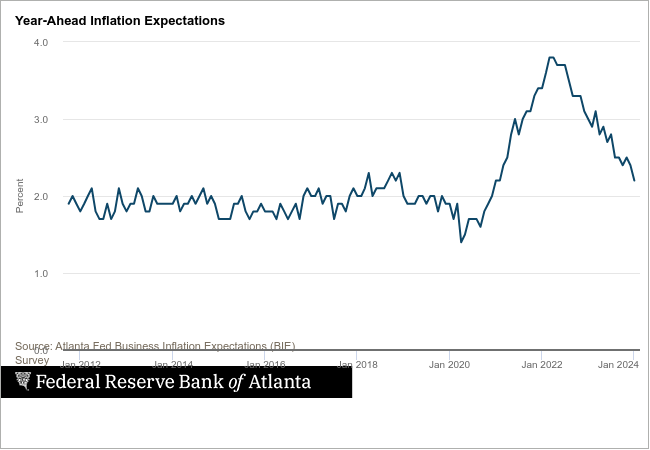
Lastly, you may have learned that in the 1970s, inflation became a self-fulfilling prophecy. While the 1970s are not the 2020s in many ways (bell-bottoms come to mind), the decline in the negotiating power of unions for wages may make consumer inflation expectations less important. However, business expectations of inflation do matter for setting prices, and those have continued to fall as well, and are just about back in the normal range again.
Jobs, Wages, and Part 2
This post is very dense with pictures and so it’s getting pretty long. Also, inflation numbers are about to come out and I don’t want to get scooped by my own ambition to write more. Discussion of other views of the economy will have to come in a part 2! To tide you over, though, here’s a juicy chart.
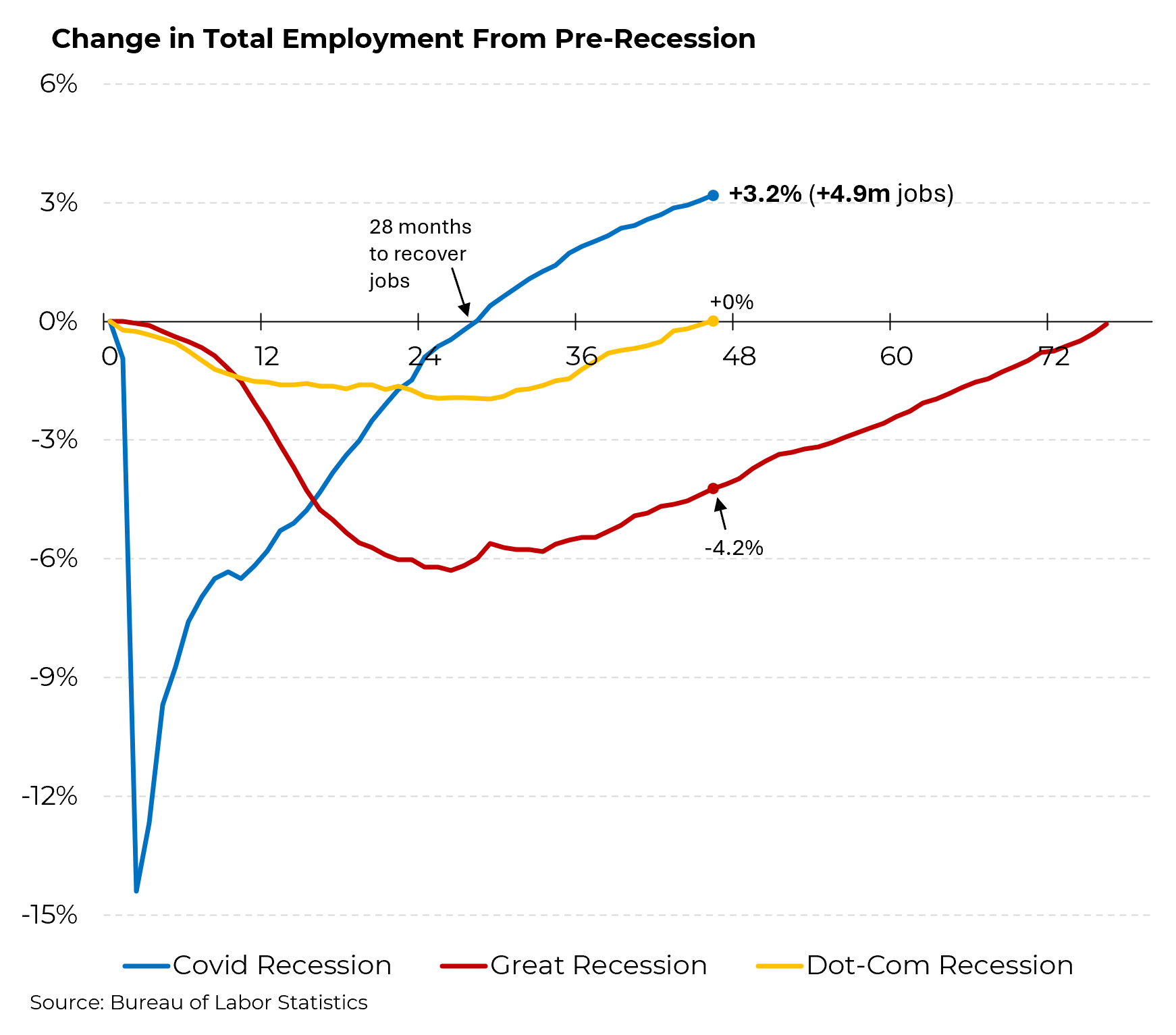
Well, I guess that’s it for today, then! I’m not an economist, but I do read and think a lot about this subject, and I’m glad you folks trust me to deliver you my round-up of the news on it. Look forward to the rest of this little survey of economic info in the near future — including some warning signs — and then I’ve got a few other things that are more up my own alley in the works, as well. Let’s hope for more good numbers today and a brand-new rip-roaring ’20s. Here’s to getting back to writing these things!
Excellent read. Keep up the good work!